
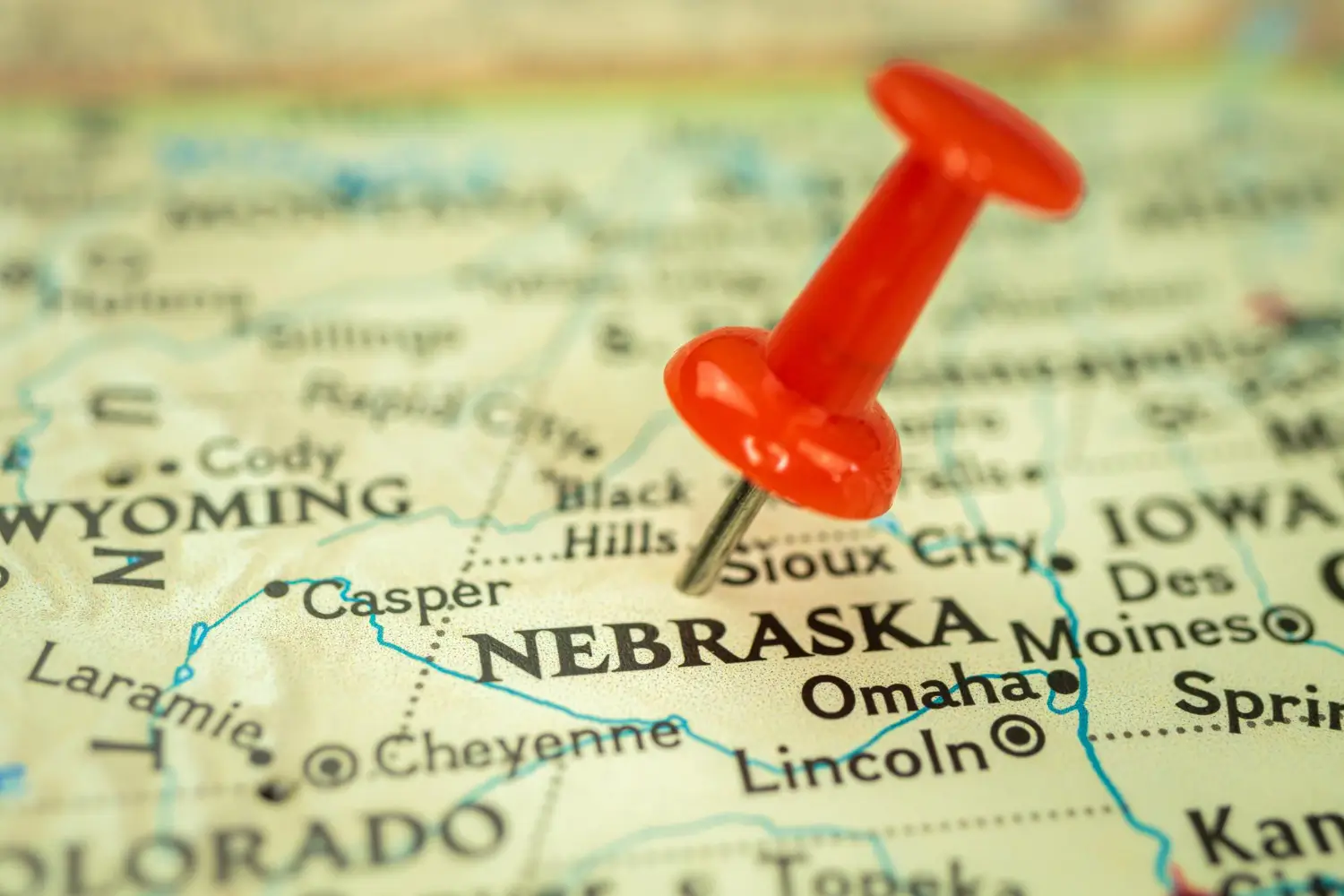
Cannabis laws are changing quickly across the U.S., but Nebraska remains a more restrictive state compared to others.
As of now, recreational marijuana is illegal but decriminalized in Nebraska. However, the state has recently taken steps toward medical reform.
In November 2024, voters approved two initiatives to legalize and regulate medical cannabis, allowing qualifying patients to possess limited amounts with a healthcare provider’s recommendation.
So, is weed legal in Nebraska? Partially: medical cannabis is legal under specific conditions, while recreational use remains illegal.
Key Takeaways
- Recreational cannabis is illegal, but possession of small amounts (≤1 oz) is decriminalized and typically results in fines rather than jail time for first offenses.
- Medical cannabis is legal under strict conditions, requiring a healthcare provider’s recommendation, with possession limits and restrictions on product types and THC amounts.
- Laws are still evolving, with potential recreational legalization on the 2026 ballot and ongoing changes to how the medical program is implemented.
Historical Overview of Cannabis Regulation in Nebraska
Cannabis regulation in Nebraska dates back nearly a century. The state first prohibited marijuana in 1927, following a broader national trend toward restricting the drug.
Over time, penalties softened slightly. In 1969, Nebraska reduced penalties for possession, and by 1978, it introduced a limited decriminalization law. Under this framework, possession of small amounts (one ounce or less) is treated as a civil offense for first-time offenders. However, stricter penalties apply for repeat offenses, and cannabis concentrates remain classified as felonies.
Efforts to legalize medical cannabis have faced repeated setbacks. In 2015 and 2016, legislative proposals failed to advance, largely due to political opposition. More recently, ballot initiatives in 2020 and 2022 were blocked or fell short, reflecting ongoing legal and institutional resistance despite growing public support.
A major shift came in November 2024, when voters approved medical cannabis legalization through two initiatives, leading to the creation of a regulatory commission. This marked the first time patients gained legal access under defined conditions.
Culturally, Nebraska has maintained a conservative stance on cannabis, even as national attitudes have shifted. At the same time, hemp has a long history in the state, dating back to cultivation in the 19th century.
Today, hemp-derived products are generally permitted under federal law, though stricter rules apply to THC content and synthetic cannabinoids.
Medical Cannabis in Nebraska: Legal Provisions and Accessibility
Medical cannabis is legal in Nebraska, following the approval of Initiatives 437 and 438 in November 2024. These measures created a limited but functional framework that allows patients to access cannabis under strict medical supervision.
To qualify, patients must obtain a signed and dated recommendation from a licensed healthcare provider (such as an MD, DO, physician assistant, or nurse practitioner). The practitioner must confirm that the potential benefits of cannabis outweigh the risks for the patient’s condition or treatment-related symptoms.
Certified patients can legally possess up to 5 ounces of medical cannabis. However, access is tightly regulated. Dispensaries may only sell to patients (or authorized caregivers) with a valid written recommendation, and purchases must align with the prescribed dosage. Additional limits apply, including a cap of 5 grams of delta-9 THC within a 90-day period and a maximum 30-day supply per transaction.
The types of products allowed are also restricted. Patients can access formats such as:
- Tablets and capsules
- Oils, tinctures, and topicals
- Patches and suppositories
- Inhalable liquids (via nebulizers or inhalers)
Notably, raw cannabis flower and traditional edibles are not permitted under current regulations.
While dispensaries and cultivation licenses have begun rolling out, the system is still evolving, and access may vary depending on regulatory updates and implementation progress.
Current Legal Status of Recreational Marijuana in Nebraska
Recreational cannabis remains illegal in Nebraska, although the state applies a limited form of decriminalization for small amounts. This means possession is still unlawful, but penalties for minor offenses are less severe than those for full criminal prosecution.
For possession of 1 ounce or less, the first offense is a civil infraction, with a fine of up to $300 and no jail time. However, repeat offenses escalate quickly:
- Second offense: misdemeanor, up to 5 days in jail, and a $500 fine
- Third offense: misdemeanor, up to 7 days in jail
Possession of larger amounts carries stricter penalties. Between 1 ounce and 1 pound can lead to up to 3 months in jail, while possession of more than 1 pound is classified as a felony, punishable by imprisonment of up to 2 years and fines up to $10,000.
Activities such as sale, distribution, or cultivation are treated much more seriously. They are considered felonies, with potential prison sentences of up to 20 years.
Regarding cannabinoids, THC products are heavily restricted outside the medical program. Even cannabis concentrates can lead to criminal charges if not covered by medical authorization.
Meanwhile, hemp-derived products (such as CBD) are generally legal if they comply with federal standards, meaning they must contain no more than 0.3% delta-9 THC. However, products containing higher THC levels or synthetic variants may face stricter scrutiny under state law.
Possession, Cultivation, and Consumption: What’s Allowed in Nebraska?
Cannabis rules in Nebraska vary significantly depending on whether use is medical or recreational.
For recreational use, possession remains illegal, though small amounts are decriminalized. Possessing 1 ounce or less is a civil infraction (up to $300 fine), while larger amounts can lead to jail time or felony charges. Transporting cannabis is not specifically permitted under recreational law, so carrying it (especially in larger quantities) can expose individuals to penalties.
For medical cannabis, qualified patients may possess up to 5 ounces, but only with a valid healthcare recommendation. Purchases must follow strict limits, including THC caps and supply restrictions, and must come from licensed dispensaries once fully operational.
Cultivation is illegal for recreational users and treated as a serious offense, often prosecuted under distribution laws. Even for medical patients, home growing is not currently permitted under the regulatory framework.
Regarding cannabinoids:
- THC products: restricted outside the medical system
- CBD and hemp products: legal if they meet federal requirements (≤0.3% THC), though enforcement can vary
Consumption is also tightly controlled. Public use is illegal, and even private use outside the medical framework can carry legal risks.
What Future for Cannabis Legislation in Nebraska?
Cannabis laws in Nebraska are still evolving, with several developments pointing to possible change.
A key proposal is the Nebraska Marijuana Legalization Initiative, which could appear on the November 2026 ballot. If approved, it would amend the state constitution to permit recreational cannabis use for adults 21 and over.
On the medical side, implementation remains uneven. The Omaha Tribe is moving ahead with plans to open a dispensary by the end of 2026, potentially becoming the first operational provider in the state despite political resistance and a slow statewide rollout.
Overall, Nebraska is in a transitional phase. While medical cannabis is now legal, access and regulation are still being defined, and recreational legalization may ultimately depend on future voter decisions.
To Sum Up
Is Marijuana legal in Nebraska? The answer is mixed. Recreational cannabis remains illegal, although small amounts are decriminalized and still carry fines or potential jail time for repeat offenses.
Medical cannabis, on the other hand, became legal in 2024, allowing qualified patients to possess limited amounts with a healthcare provider’s recommendation. However, strict rules apply to product types, THC limits, and access through regulated dispensaries.
Laws are still evolving, especially as new proposals and regulatory changes emerge. It’s essential to stay up to date on the latest legal developments.

Rita Ferreira
Rita is a seasoned writer with over five years of experience, having worked with globally renowned platforms, including Forbes and Miister CBD. Her deep knowledge of hemp-related businesses and passion for delivering accurate and concise information distinguish her in the industry. Rita's contributions empower individuals and companies to navigate the complexities of the cannabis world, and her work remains a valuable resource for those seeking a deeper understanding of its potential.