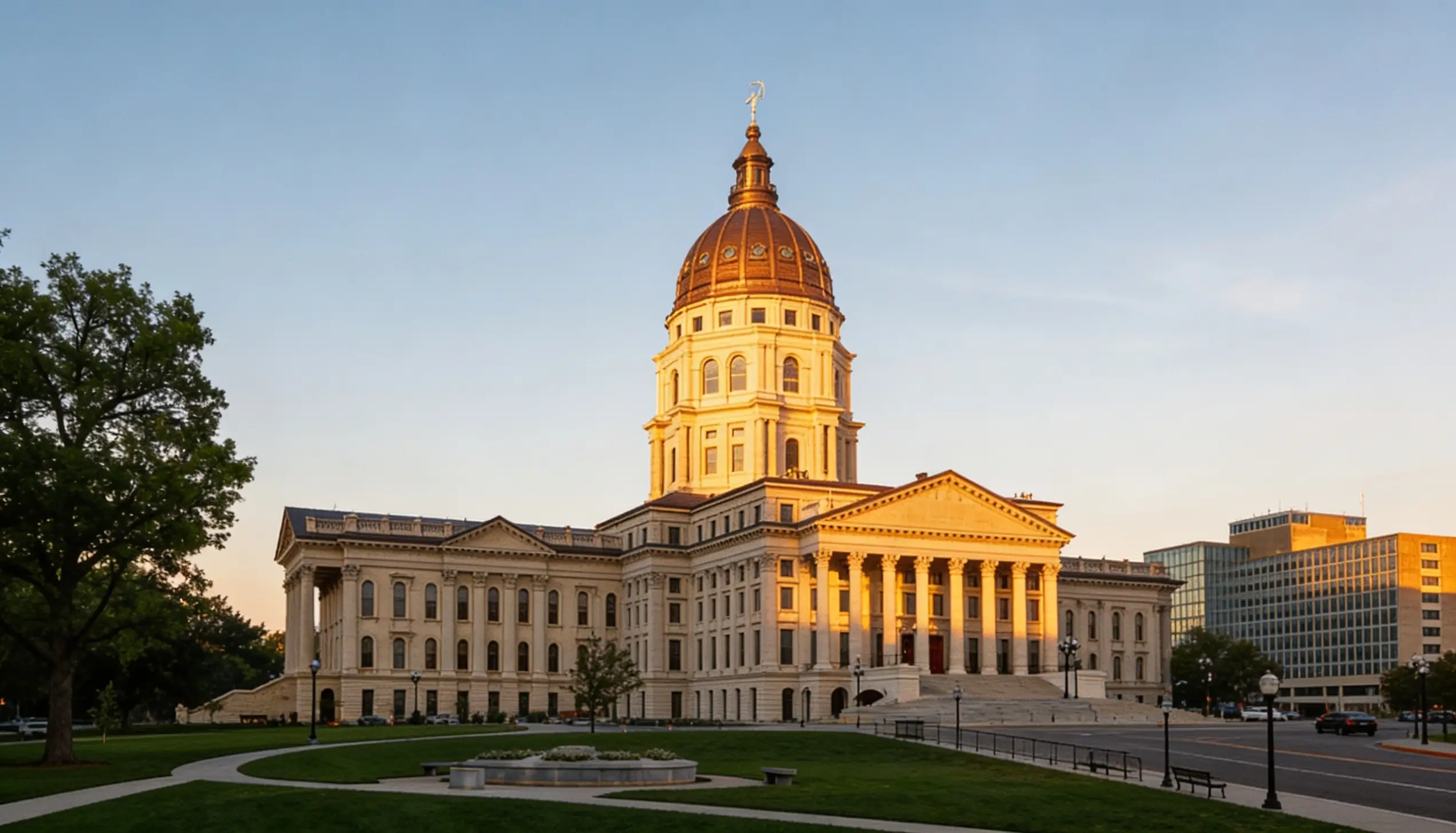
Weed is not legal in Kansas for recreational use, and the state lacks a medical cannabis program, which means any use of cannabis can lead to criminal penalties. Some CBD products are allowed under strict conditions. Broader legalization efforts are still under discussion, and lawmakers continue to introduce bills, suggesting future changes are possible. Still, as of now, cannabis remains largely prohibited in Kansas.
Key Takeaways
- Cannabis is illegal in Kansas for both recreational and medical use.
- CBD use is allowed under strict conditions, but there is no complete legal protection.
- Reform efforts are ongoing, but change continues to face strong political resistance.
Historical Overview of Cannabis Regulation in Kansas
Cannabis has been illegal in Kansas for decades, and broader U.S. prohibition policies from the 20th century have largely shaped the legislation. The state has traditionally taken a strict stance, with criminal penalties for possession and no legal access to recreational cannabis. Cultural and political attitudes in Kansas (often more conservative than in other states) have played a key role in maintaining these restrictions.
Over the past 10 years, there have been small but notable developments. In 2019, Kansas passed “Claire and Lola’s Law” (SB 28), signed by Laura Kelly, which introduced limited protections for individuals using CBD oils containing up to 5% THC. However, this applies only as an affirmative defense; patients can still face arrest and must prove legal use in court.
Kansas has also aligned partially with federal hemp policy following the Agricultural Improvement Act of 2018, allowing hemp-derived products with very low THC levels.
Recent legislative proposals show gradual momentum, with bills like SB 295 (2025) aiming to reduce penalties for small possession, while HB 2405 proposes full legalization for adults. Despite these efforts, cannabis arrests are very common and reflect the state’s ongoing cautious approach to reform.
Medical Cannabis in Kansas: Legal Provisions and Accessibility
Unlike most U.S. states, Kansas doesn’t have a medical marijuana system. This means there is no legal framework for purchasing, possessing, or using cannabis for medical purposes within the state.
The only exception is “Claire and Lola’s Law”. This law provides an affirmative defense for individuals possessing CBD oil containing up to 5% THC. However, this does not make medical cannabis legal. Patients can still be arrested and must prove in court that their use meets the legal criteria. Importantly, the law does not allow in-state production or sale of these products.
Efforts to change this have faced repeated setbacks. The Kansas House passed medical cannabis bills in 2022 and 2023, but the Senate did not advance them. More recently, SB 294 has been introduced to create a limited program, but it has not yet been enacted.
As of now, patients in Kansas have no clear legal access to medical cannabis.
Current Legal Status of Recreational Marijuana in Kansas
Recreational cannabis is fully illegal in Kansas. The state classifies marijuana as a Schedule I controlled substance, placing it alongside drugs such as heroin and LSD. This means that possession, sale, cultivation, and distribution are all prohibited, with no legal tolerance for personal use.
Possession of small amounts is typically treated as a misdemeanor. It can result in up to six months in jail and fines of up to $1,000 for a first offense. Repeat offenses carry harsher penalties, including longer jail sentences. Larger quantities or intent to distribute can lead to felony charges, with significantly more severe consequences.
Cannabis enforcement has also raised social concerns, and a report from the American Civil Liberties Union found that Black individuals in Kansas were significantly more likely to be arrested for cannabis possession than white individuals, despite similar usage rates.
Regarding cannabinoids, Kansas law makes a clear distinction:
- THC products: Illegal outside very limited exceptions
- CBD products: Only permitted under narrow conditions, often requiring zero or very low THC
- Hemp products: Legal if compliant with federal standards (≤0.3% THC), following the Agricultural Improvement Act of 2018
Kansas maintains a strict prohibition model, with only limited allowances for hemp-derived products.
Possession, Cultivation, and Consumption: What’s Allowed in Kansas?
Cannabis laws in Kansas are strict. There are no legal quantity limits, because any amount of marijuana is illegal. A first-time possession offense is a misdemeanor, punishable by up to six months in jail and a $1,000 fine under § 21-5705 of the Kansas Legislature. Larger quantities (450 grams or more) can trigger a presumption of intent to distribute, leading to felony charges and significantly harsher penalties.
Cultivation is also illegal. Growing even a small number of plants can result in criminal charges, with penalties increasing sharply depending on the number of plants. For example, cultivating more than four plants may result in felony charges, including prison sentences and substantial fines.
There are no legal retail channels to purchase cannabis in Kansas. Transporting cannabis, whether within the state or across state lines, is illegal and may result in additional charges.
Public and private consumption of marijuana is prohibited. Since Kansas has no medical cannabis program, there are no separate rules for patients, meaning all non-exempt cannabis use remains illegal.
What Future for Cannabis Legislation in Kansas?
Cannabis reform in Kansas remains uncertain, but several proposals show gradual movement. Bills such as SB 295 aim to decriminalize small amounts of cannabis, replacing criminal penalties with civil fines, while HB 2405 proposes full legalization for adults 21 and over. On the medical side, SB 294 seeks to introduce a limited medical cannabis program. However, similar efforts have stalled in recent years.
At the federal level, discussions around reclassifying marijuana may support research, but state-level approval is still required for any real change in Kansas.
Overall, while legislative activity continues, strong political resistance remains. Meaningful reform is possible, but progress is likely to be gradual rather than immediate.
To Sum Up
Is Marijuana legal in Kansas? No. Cannabis is illegal for both recreational and medical use, with strict penalties for possession, cultivation, and distribution.
The state doesn’t offer a regulated medical cannabis program, and even small amounts can lead to criminal charges. Limited exceptions exist for certain CBD products, but these are narrowly defined and do not provide full legal protection.
While lawmakers continue to introduce proposals for decriminalization and medical access, no major reforms have been enacted so far.
If you live in Kansas or plan to visit, it is essential to stay informed and follow updates from official sources as legislation continues to evolve.

Rita Ferreira
Rita is a seasoned writer with over five years of experience, having worked with globally renowned platforms, including Forbes and Miister CBD. Her deep knowledge of hemp-related businesses and passion for delivering accurate and concise information distinguish her in the industry. Rita's contributions empower individuals and companies to navigate the complexities of the cannabis world, and her work remains a valuable resource for those seeking a deeper understanding of its potential.