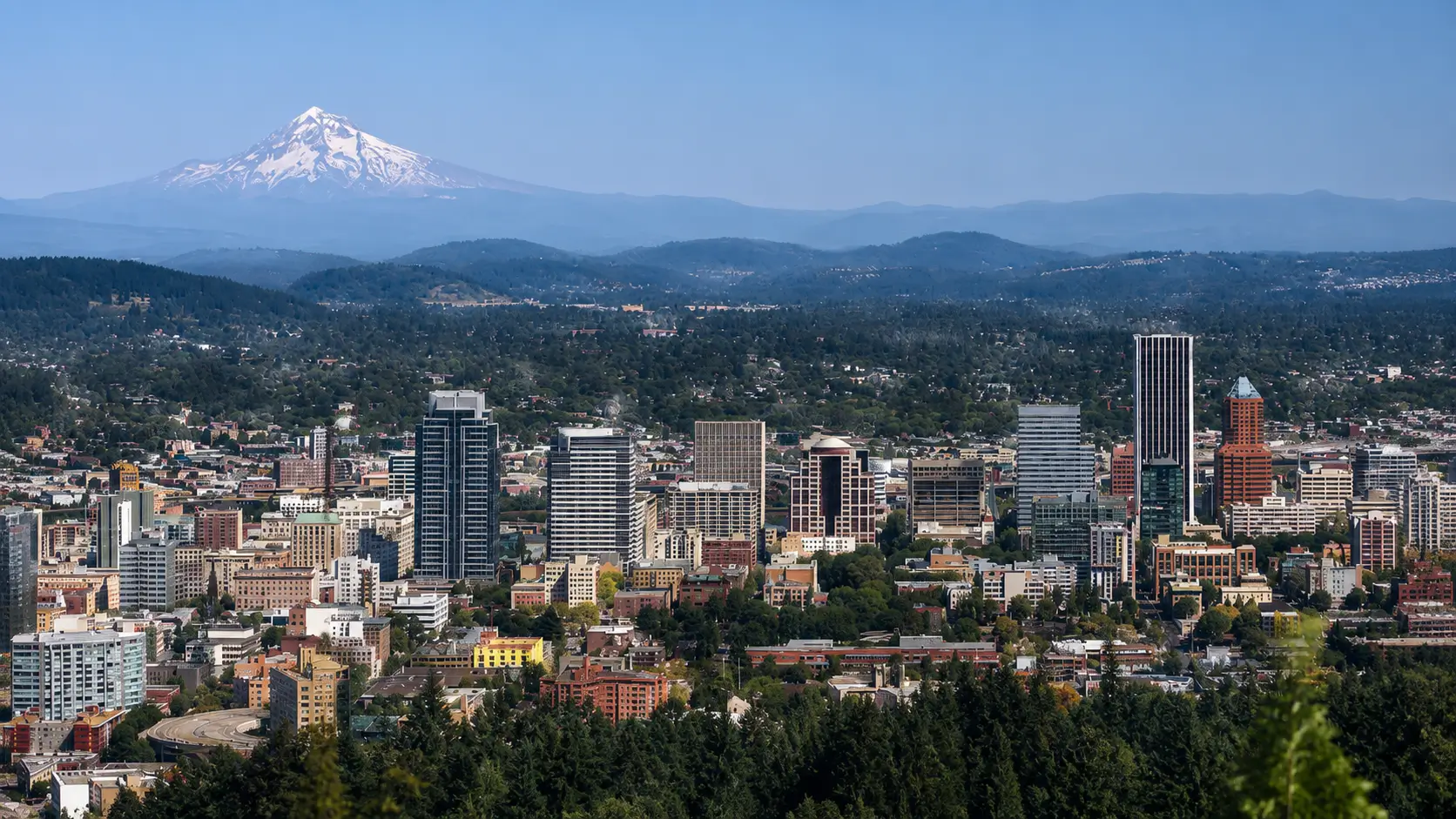
Cannabis is legal in Oregon for both recreational and medical use. Voters approved Measure 91 in November 2014, legalizing recreational marijuana for citizens aged 21 and older, and the law took effect on July 1, 2015. Today, adults can legally buy cannabis from licensed retailers, possess limited amounts for personal use, and grow up to four plants at home.
Oregon also operates a medical marijuana program that allows registered patients to possess larger quantities and cultivate additional plants. The state’s cannabis industry is regulated by the Oregon Liquor and Cannabis Commission (OLCC), which oversees licensing, testing, and retail sales.
Key Takeaways
- Cannabis is legal in Oregon for both recreational and medical use.
- Medical marijuana patients can possess and cultivate more cannabis than recreational users.
- Oregon regulates THC, CBD, and hemp products through strict licensing, testing, and labeling requirements.
Historical Overview of Cannabis Regulation in Oregon
Oregon has a long history of cannabis reform. In 1973, it became the first U.S. state to decriminalize possession of small amounts of marijuana. Instead of facing criminal charges, adults caught with up to one ounce typically received a civil fine.
During the following decades, voters considered several proposals to further liberalize cannabis laws. While some measures failed, they helped keep legalization on the political agenda. A major milestone arrived in 1998, when voters approved Ballot Measure 67, creating the Oregon Medical Marijuana Program (OMMP). The law allowed patients with qualifying medical conditions to legally possess and use cannabis with a physician’s recommendation.
Oregon took another major step in November 2014 when voters approved Measure 91. The measure legalized recreational cannabis for adults aged 21 and older, and the new law took effect on July 1, 2015. Retail sales began later that year and transitioned to a fully licensed market regulated by the Oregon Liquor and Cannabis Commission (OLCC).
Public support for regulated cannabis access, personal freedom, and criminal justice reform helped drive these changes. Since legalization, Oregon has continued to refine its cannabis laws through updates to licensing, product safety standards, and enforcement rules.
Oregon also permits industrial hemp cultivation and processing. Following the 2018 federal Farm Bill, the state’s hemp industry expanded, although lawmakers have recently introduced stricter rules for intoxicating hemp-derived cannabinoids such as delta-8 THC and similar products.
Medical Cannabis in Oregon: Legal Provisions and Accessibility
Oregon has allowed the medical use of cannabis since 1998, when voters approved Ballot Measure 67 and established the Oregon Medical Marijuana Program (OMMP). While recreational cannabis is now legal, the medical program still provides important benefits for patients.
To qualify, you must:
- Be an Oregon resident
- Obtain a recommendation from a licensed healthcare provider
The state recognizes a range of qualifying conditions, including cancer, HIV/AIDS, epilepsy, PTSD, glaucoma, severe pain, severe nausea, and certain neurological disorders. Once approved, you can apply for an OMMP card through the Oregon Health Authority.
The biggest advantage of joining the program is access to higher possession and cultivation limits. Registered patients can possess up to 24 ounces (1.5 pounds) of usable cannabis and grow up to 6 mature plants and 12 immature plants. By comparison, recreational users can only keep up to 8 ounces at home and grow up to 4 plants per household.
Although recreational cannabis has become widely available since legalization in 2015, the medical program still offers meaningful advantages, including higher possession and cultivation limits, caregiver and grower protections, tax-exempt purchases, and access for qualifying minors.
Current Legal Status of Recreational Marijuana in Oregon
Oregon has one of the most established recreational cannabis markets in the United States. Voters approved Measure 91 in November 2014, and adults aged 21 and older have been able to legally possess and use cannabis since July 1, 2015.
Today, you can legally buy cannabis from licensed dispensaries throughout the state. The Oregon Liquor and Cannabis Commission (OLCC) regulates the industry and oversees everyone involved in the supply chain.
For most consumers, the rules are relatively straightforward: adults can possess up to 2 ounces of usable cannabis in public and up to 8 ounces at home.
The state also allows a wide range of regulated THC products, including flower, pre-rolls, concentrates, vape products, edibles, beverages, and tinctures.
CBD products made from hemp are legal as well, provided they meet state and federal requirements. Like the rest of the U.S. hemp industry, Oregon follows the federal 0.3% delta-9 THC limit for hemp products.
That said, legalization doesn’t mean cannabis can be used anywhere or in any amount. Oregon still prohibits public consumption, and driving under the influence of cannabis carries the same risks and penalties as driving under the influence of alcohol. The state also imposes penalties for possession above the legal limits and for any unlicensed cannabis sales or production.
Possession, Cultivation, and Consumption: What’s Allowed in Oregon?
The state’s cannabis laws are fairly permissive, but they still set clear limits on how much marijuana you can possess, grow, and transport.
For recreational users aged 21 and older, the main limits are:
| Activity | Limit |
| Cannabis in public | Up to 2 ounces |
| Cannabis at home | Up to 8 ounces |
| Home cultivation | Up to 4 plants per household |
| Cannabis concentrates at home | Up to 1 ounce |
| Solid infused products (edibles, gummies, etc.) | Up to 16 ounces |
| Liquid infused products | Up to 72 ounces |
If you participate in the Oregon Medical Marijuana Program (OMMP), the limits are much higher. Registered patients can possess up to 24 ounces (1.5 pounds) of usable cannabis and grow up to 6 mature plants and 12 immature plants.
When it comes to buying cannabis, Oregon requires consumers to use licensed dispensaries regulated by the OLCC. These stores can legally sell cannabis flower, pre-rolls, concentrates, vape cartridges, edibles, beverages, tinctures, and other THC products that have passed state testing requirements.
Where many people get caught up is in consumption and transportation. Oregon only allows cannabis use on private property where the owner permits it. You can’t legally consume marijuana in public places, parks, sidewalks, bars, restaurants, or most workplaces.
You can transport cannabis within Oregon as long as it stays within the state’s legal limits. However, crossing state lines with marijuana remains illegal under federal law, even if you’re traveling to another state where cannabis is legal. Oregon also treats driving under the influence of cannabis as a criminal offense.
CBD and hemp-derived products are legal if they comply with state and federal regulations, including the federal hemp limit of 0.3% delta-9 THC.
What Future for Cannabis Legislation in Oregon?
Recent changes have focused on hemp-derived intoxicants, product safety, licensing, and enforcement against illegal cannabis operations.
In 2025, HB 3825 introduced stricter rules for intoxicating hemp products, including delta-8 THC, and strengthened testing and labeling requirements. Looking ahead, one of the biggest proposals is a 2026 ballot initiative that would allow licensed cannabis cafés and social consumption lounges.
While major legalization changes are not expected, Oregon will likely continue refining its cannabis laws as the market evolves and federal policy develops.
To Sum Up
Is marijuana legal in Oregon? Yes. Oregon has one of the most mature legal cannabis markets in the United States, allowing both recreational and medical use under a regulated framework. While adults and registered patients can legally access a wide range of cannabis products, rules still apply to possession limits, public consumption, impaired driving, and commercial activities.
The state’s cannabis laws continue to evolve, particularly around hemp-derived cannabinoids and consumer access. If you’re considering using, purchasing, or investing in cannabis in Oregon, staying up to date with regulatory changes remains essential.

Rita Ferreira
Rita is a seasoned writer with over five years of experience, having worked with globally renowned platforms, including Forbes and Miister CBD. Her deep knowledge of hemp-related businesses and passion for delivering accurate and concise information distinguish her in the industry. Rita's contributions empower individuals and companies to navigate the complexities of the cannabis world, and her work remains a valuable resource for those seeking a deeper understanding of its potential.